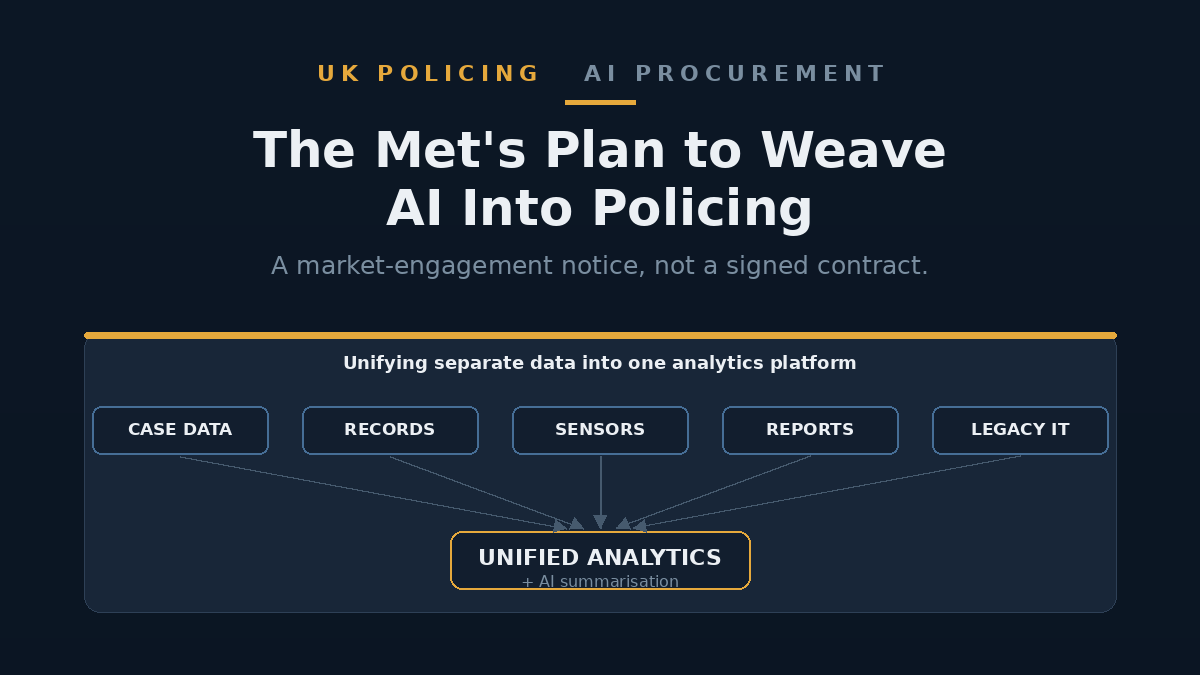
The Metropolitan Police has published a procurement notice setting out plans for a single enterprise platform to embed advanced analytics and artificial intelligence across its operations, a programme it calls Unified Operational Analytics. The document, posted to the government's Find a Tender service on 1 September, describes wanting real-time insight, faster decisions and, explicitly, "AI driven efficiency gains through summarisation" across policing workflows. It is early-stage: this is a market-engagement notice, a way of sounding out suppliers, with a formal tender not expected until early 2027. But it is a rare, on-the-record look at how one of the world's largest police forces wants to use AI, and it is worth reading carefully.
This piece reflects the procurement notice as published in September 2026. It describes an intention and a market-sounding exercise, not a signed contract or a deployed system.
What the document actually says
The notice is issued by the Mayor's Office for Policing and Crime on behalf of the Metropolitan Police Service. Its core complaint is familiar to anyone in a large organisation: data sits in separate, unlinked systems, and pulling insight from it is slow. The proposed answer is an enterprise platform that integrates those systems, including legacy ones, and brings analytics directly into "core operational workflows" rather than leaving them as siloed, one-off tools.
Among the capabilities the force lists as things it "may" want are rapid integration of diverse and legacy systems, full data provenance across all processes and outputs, faster delivery of tools to frontline teams, and AI-driven summarisation across operational and analytical work. It says it wants "UK Sovereign data and analytics services" and the ability to connect to both structured and unstructured data.
Where it sits in the process
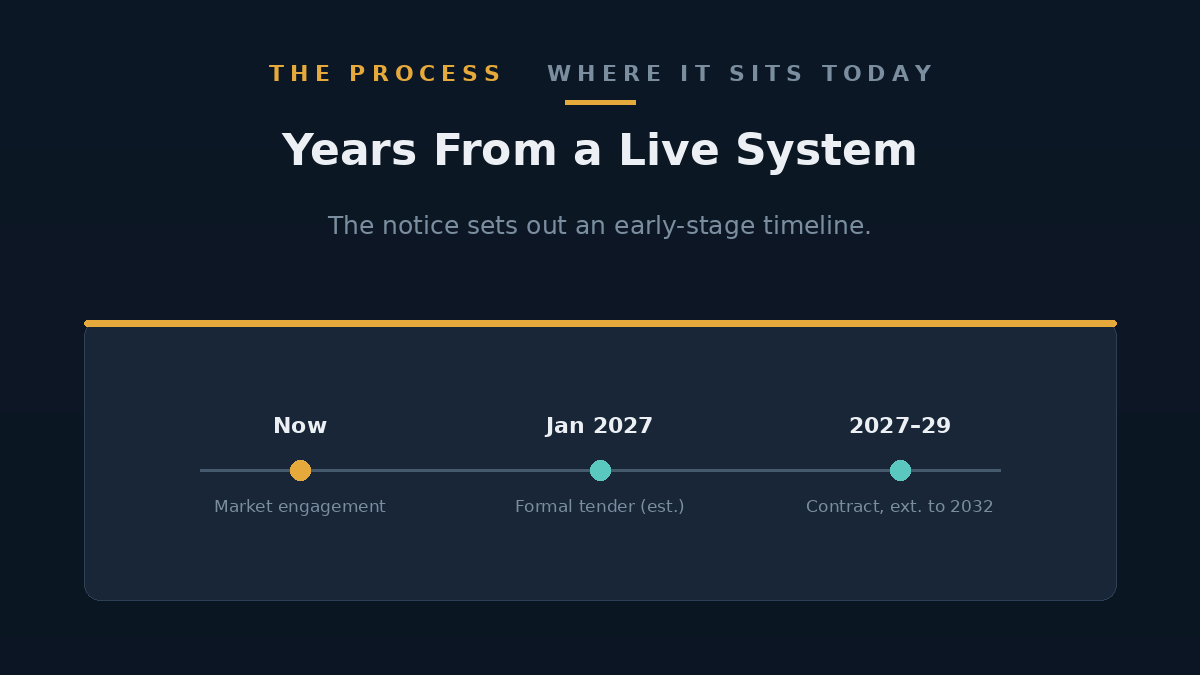
This is the earliest formal stage of buying. The notice is a preliminary market engagement under the Procurement Act 2023: the Met is inviting potential suppliers to a session, run with the trade body TechUK on 1 October, to explain the scope and gather feedback. Attending requires signing a non-disclosure agreement. A formal tender notice is only estimated for late January 2027, with a contract expected to run from mid-2027 for two years, extendable to 2032.
In other words, nothing is bought, and no supplier is chosen. What the document gives us is not a system but a statement of intent, unusually specific about the direction: the Met wants AI woven into the day-to-day analytical work of policing, not bolted on at the edges.
The oversight questions this raises
Framing matters here, so it is worth being precise about what the notice does and does not say. It does not mention live facial recognition, and it should not be read as a facial-recognition procurement. What it describes is broader: an analytics layer that brings together existing data to support operational decisions, with AI used partly to summarise across that data.
That breadth is exactly why it invites scrutiny. Bringing "existing, unlinked data" into one platform is precisely the kind of data-joining that data-protection and civil-liberties campaigners watch closely, because combining datasets can reveal more than any single source and can entrench errors if the underlying data is poor. The notice's own emphasis on "full data provenance" suggests the Met is aware of the accountability question. Whether summarisation and analytics feed into decisions that affect individuals, and what human oversight sits over them, are the things that will matter, and they are not settled by a market-engagement notice. They are questions to hold open as the procurement develops.
Why it matters for readers
Police use of AI is one of the areas where the technology touches people most directly and with the least visibility, because it happens inside institutions rather than in apps you choose to use. Procurement notices like this one are among the few public windows into it. For UK readers, the useful thing is not alarm but attention: a major force is now openly planning to make AI analytics part of its core operations, on a documented timeline, and that is a process worth following as it moves from engagement to tender to award.
FAQ
Is the Met buying an AI system now?
No. This is a preliminary market-engagement notice, the first step in a long procurement. The Met is gathering supplier feedback; a formal tender is only estimated for early 2027, with any contract following after that.
Is this about facial recognition?
The notice does not mention facial recognition and should not be read as a facial-recognition procurement. It describes a broad operational-analytics platform that integrates data and uses AI partly for summarisation.
What does "AI driven summarisation" mean here?
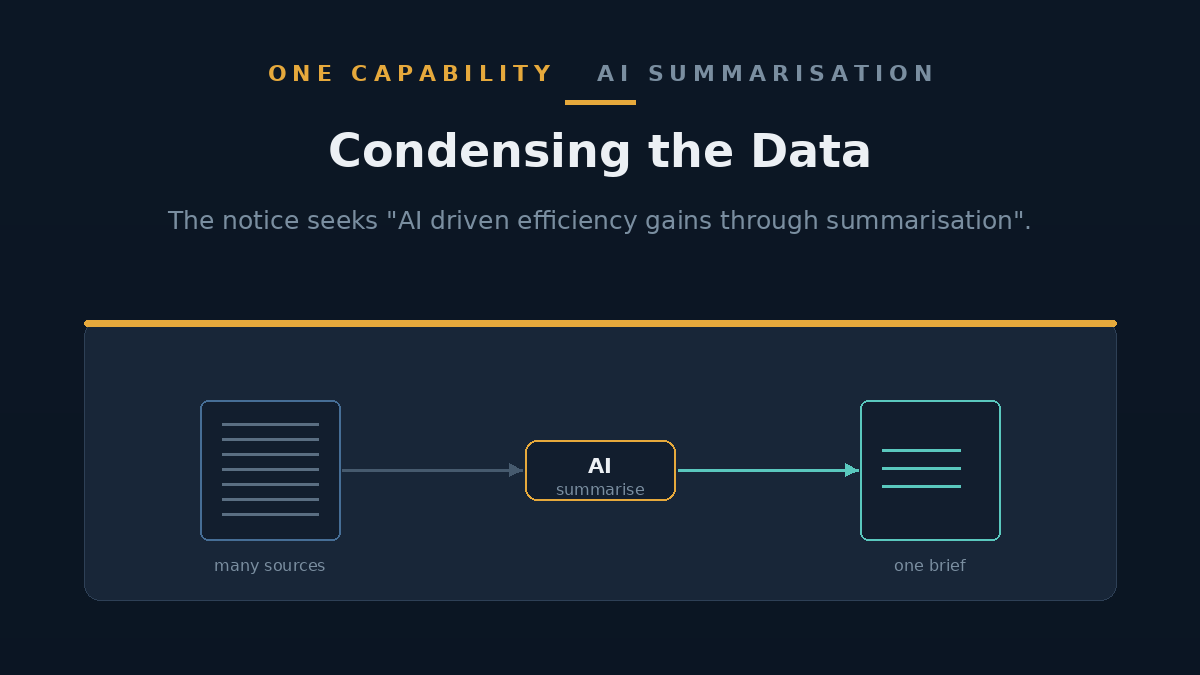
The notice lists it as one sought capability: using AI to condense information across operational and analytical workflows, in principle so analysts and frontline officers spend less time assembling data and more time acting on it. The document does not detail how it would be governed.
When would anything actually be in use?
On the notice's own timeline, a tender is estimated for late January 2027 and a contract would run from mid-2027, so any live system is years away and subject to the procurement completing.
The takeaway
Treat this as a signal, not an event. The Metropolitan Police has said, in a public document, that it wants AI analytics embedded across its operations, and it has put a timeline on getting there. Nothing is built or bought yet, and the notice raises more governance questions than it answers, on data-joining, provenance and human oversight. The right response is to keep watching the procurement as it develops, because the detail that matters, how these tools are governed and what decisions they touch, will emerge at the tender stage, not now.