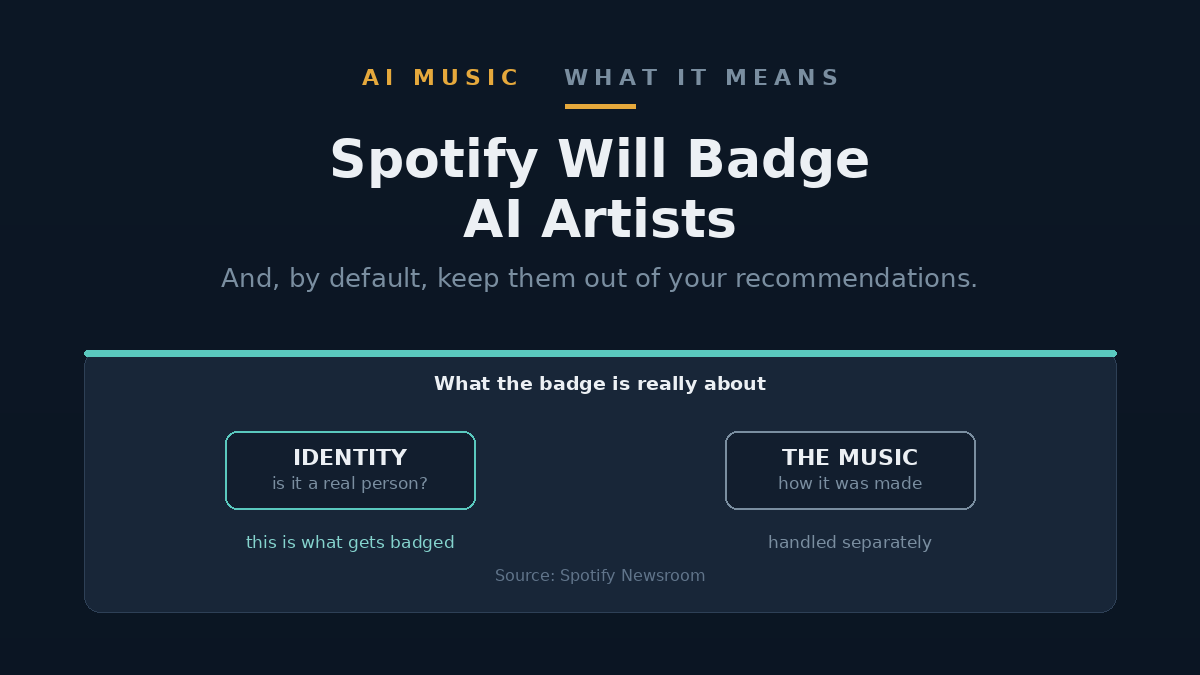
Spotify will start putting an "AI Persona" badge on artist profiles whose public identity is generated by AI rather than representing a real person, and by default it will keep those acts out of its editorial and algorithmic recommendations. The company announced the change on 11 August 2026, with the badges appearing from mid-September. Artists can label themselves from 11 August, but Spotify says it will not rely on that alone and will review profiles itself. It is one of the clearer attempts yet to tell listeners who, or what, is behind the music. It also leaves a telling gap that is worth understanding before you assume it solves the problem.
This piece reflects reporting as of August 2026. Roll-out dates and enforcement details come from Spotify and may change as the feature launches.
What the badge actually covers
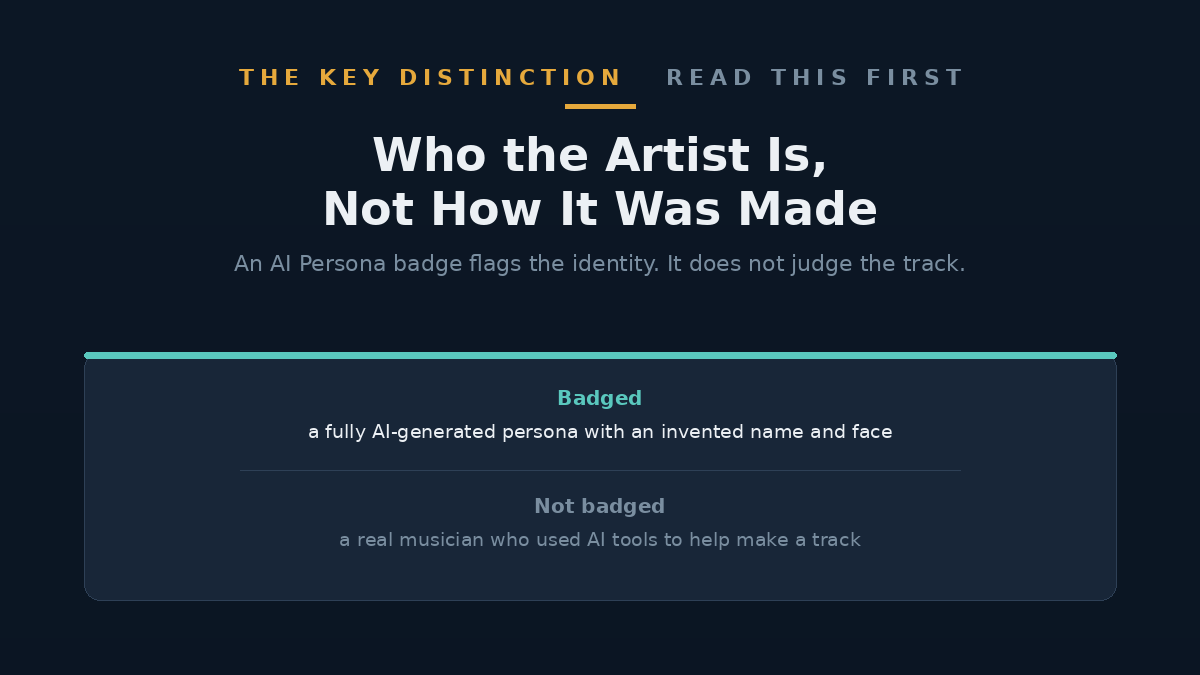
Here is the distinction that matters most, and it is easy to miss. Spotify says the badge is about the artist's identity, not about how the music was made. In the company's own words, "this badge is about the artist's public identity, not about how the music was made". So a fully AI-generated persona with an invented name and face gets flagged, but a real human musician who used AI tools to help make a track does not. Spotify handles that second question separately, through existing features it calls AI Credits and SongDNA.
Once applied, the badge shows on the artist's profile, in Search, and on track rows inside playlists, so a listener can see it without digging. Tapping it will show whether the artist disclosed the label themselves or whether Spotify's review team applied it.
How Spotify decides
There are two routes to a badge. Artists can self-disclose through Spotify for Artists, which the company is encouraging. And Spotify will review profiles itself, flagging those whose name and imagery appear to represent a photorealistic AI-generated identity. It says it will start with artists who have passed certain audience thresholds, so the most-listened-to profiles are covered first. Artists who think the label has been misapplied can appeal, and Spotify says it will later let listeners report profiles they believe are AI personas.
Why it matters for listeners and musicians
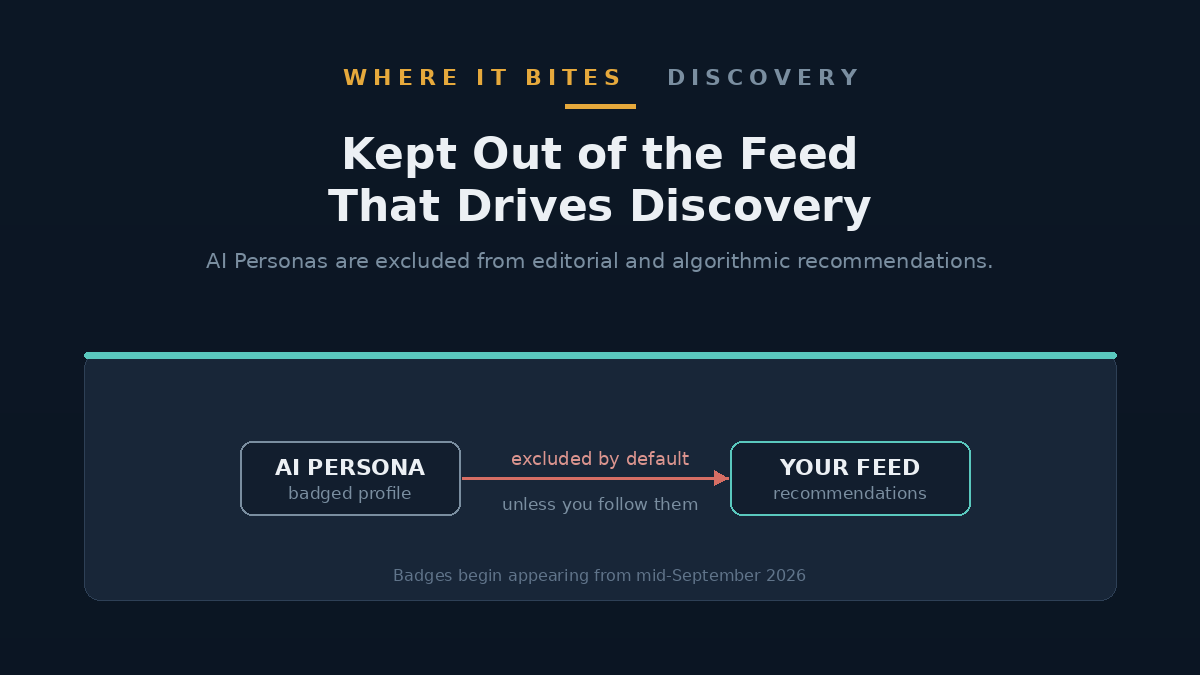
For listeners, the honest appeal is simple. Spotify says people have told it they dislike discovering that an artist they thought was human is actually an AI creation. A visible badge, plus keeping those acts out of the recommendations that drive most discovery, addresses that directly. Unless you choose to follow an AI persona, you are less likely to be fed one by the algorithm.
For real musicians, especially the independent artists who make up most of Spotify's roster, the stakes are about competition for attention and royalties. A flood of cheaply produced AI acts crowding playlists and recommendation feeds is a genuine threat to people trying to build a career, and steering discovery towards human artists is Spotify's answer. The move sits alongside the platform's licensing deals with Universal Music Group and Merlin to allow authorised AI remixes and covers that still pay the original artists, part of a wider attempt to separate sanctioned AI use from unwanted "slop".
Where it could go wrong
The weak point is enforcement. A badge that Spotify's own review team applies, based on how "photorealistic" and "AI-generated" a profile looks, will inevitably catch some real people and miss some fakes. The appeals process matters, and so does how transparent Spotify is about mistakes. The identity-versus-music line, while defensible, will also confuse listeners who reasonably assume an "AI Persona" badge means the music itself is machine-made. And none of this reaches the many AI tracks released under human-looking or borrowed identities that slip below the review thresholds. It is a meaningful step, not a fix.
FAQ
When does this start?
Artists can label themselves from 11 August 2026 through Spotify for Artists. The visible "AI Persona" badges begin appearing to listeners from mid-September 2026.
Does the badge mean the music was made by AI?
No, and this is the common misunderstanding. The badge is about whether the artist's identity is a real person. A badged profile is an AI persona; it does not, on its own, tell you how any particular track was produced. Spotify covers that through separate features.
Will I still hear AI music?
Possibly. AI personas are excluded from recommendations by default, but not removed from the platform, so you can still find and follow them if you want. And human artists who used AI tools are not badged at all, so AI-assisted music can still reach you normally.
Is this a UK thing or global?
Spotify's announcement describes a platform-wide change and does not set out a separate country-specific timeline, so UK listeners and UK-based artists should expect to see the badges as they roll out from mid-September. If Spotify later stages the launch by region, that could shift.
The takeaway
Spotify's AI Persona badge is a sensible, listener-friendly move, and keeping AI acts out of default recommendations gives it real teeth rather than being a cosmetic label. The catch is the line it draws: it tells you whether the artist is a real person, not whether the music is machine-made, and those two questions are easy to conflate. Used well, it will cut down on the unpleasant surprise of finding out your new favourite artist never existed. It will not, on its own, hold back the tide of AI music, and Spotify is careful not to claim it will.