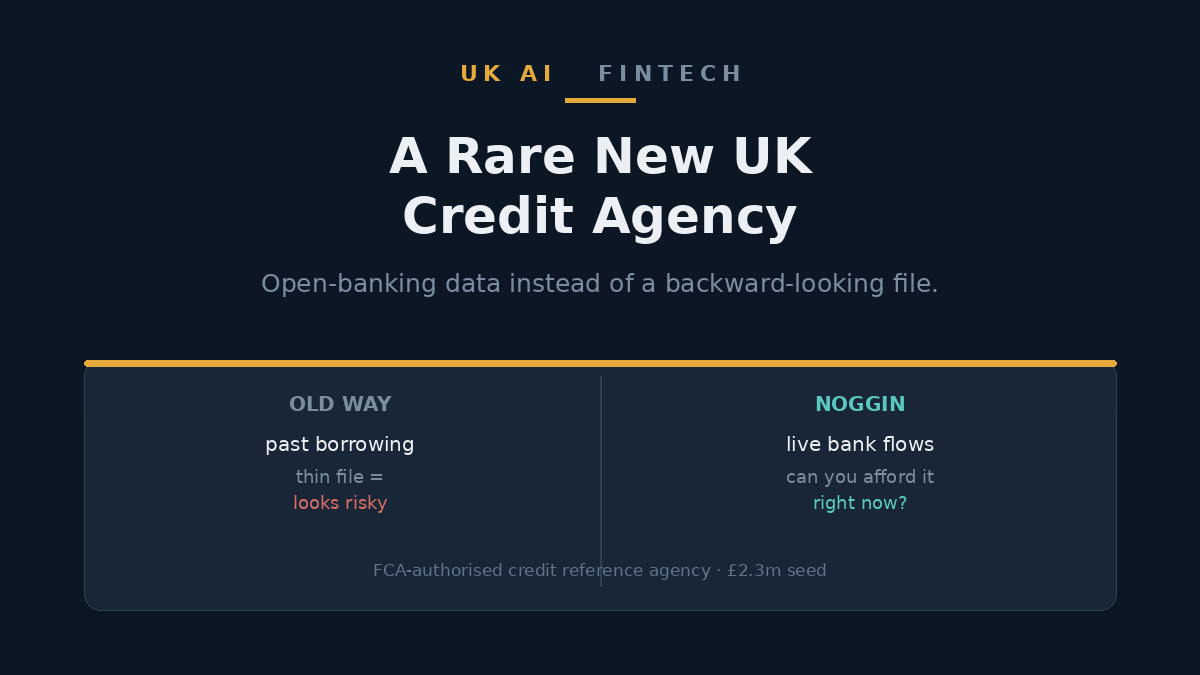
A Newcastle fintech called Noggin HQ has become one of very few companies to win authorisation as a UK credit reference agency in the last decade, and has raised £2.3m to go with it, BusinessCloud reports. The pitch is a real shift in how you might be judged for credit: instead of scoring you on a backward-looking file of past borrowing, Noggin uses permissioned open-banking data – your actual income and outgoings – to tell lenders what you can genuinely afford today. For the roughly 3.2 million UK adults the company says were declined credit despite being able to repay, that could be good news. The honest caveat: it works by handing lenders a view of your bank transactions, and the claim that it makes lending fairer is a promise, not yet a proven result.
This piece reflects reporting as of August 2026. The funding total, the market claims and the "3.2 million declined" figure come from the company and its backers; the FCA authorisation is a matter of public record.
What Noggin HQ actually does
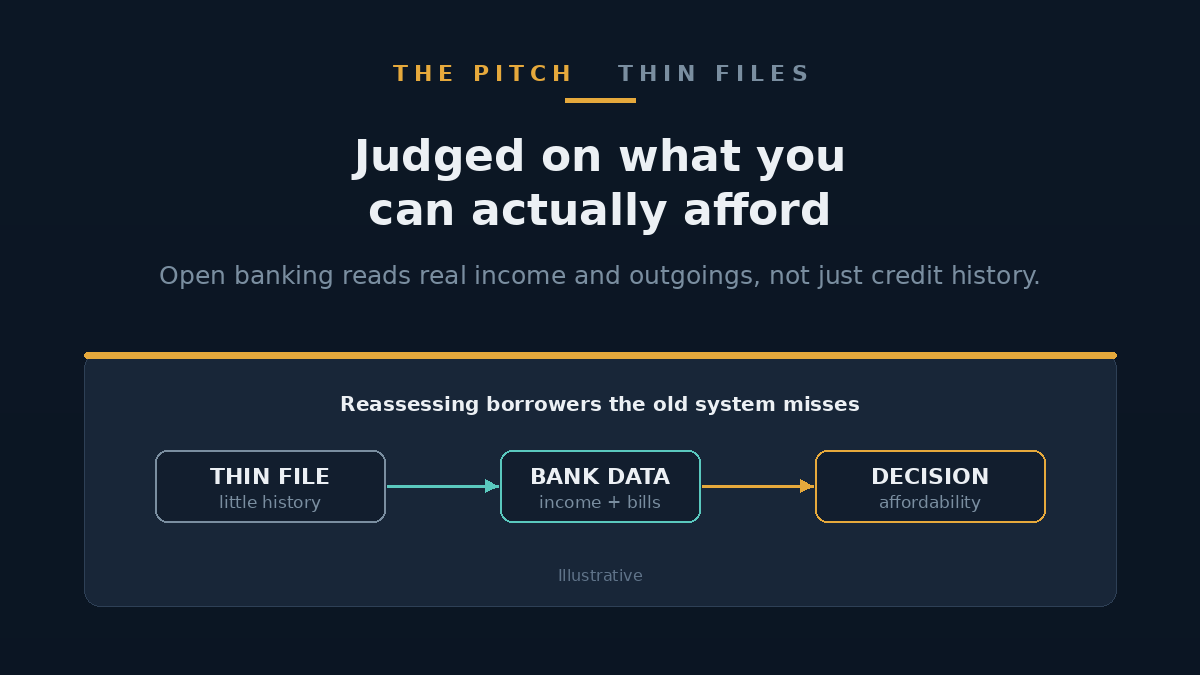
Traditional credit scoring looks backwards. It reads your history of loans, cards and repayments, and if that history is thin – you are young, newly arrived in the UK, or you simply have not borrowed much – you can look risky even when your bank balance says otherwise. Noggin's model, built on open banking, reads the flows instead: money in, money out, whether the rent and bills get paid. In principle that catches people the old system misses.
The company was founded by childhood friends Evangeline Atkinson and Laura Mills after they were themselves declined for credit while in full-time work and paying their bills. It had previously raised £710,000 in pre-seed funding; this £2.3m oversubscribed seed round was led by Blackfinch Ventures, with Oxford Capital and Bethnal Green Ventures returning alongside angel investors including a former chief executive of TotallyMoney, according to BusinessCloud.
Why the FCA authorisation is the real headline
The money is notable; the licence is more so. Becoming an authorised credit reference agency in the UK is genuinely rare – the incumbents are Experian, Equifax and TransUnion, and by Noggin's own account it is one of only a handful of new agencies authorised in a decade. That authorisation, from the Financial Conduct Authority, is what lets Noggin supply its data to regulated lenders at all. It is the difference between an interesting model and a business a bank can legally act on. Readers who want to check the status themselves can look the firm up on the FCA's public register.
The trade-off nobody should skip past
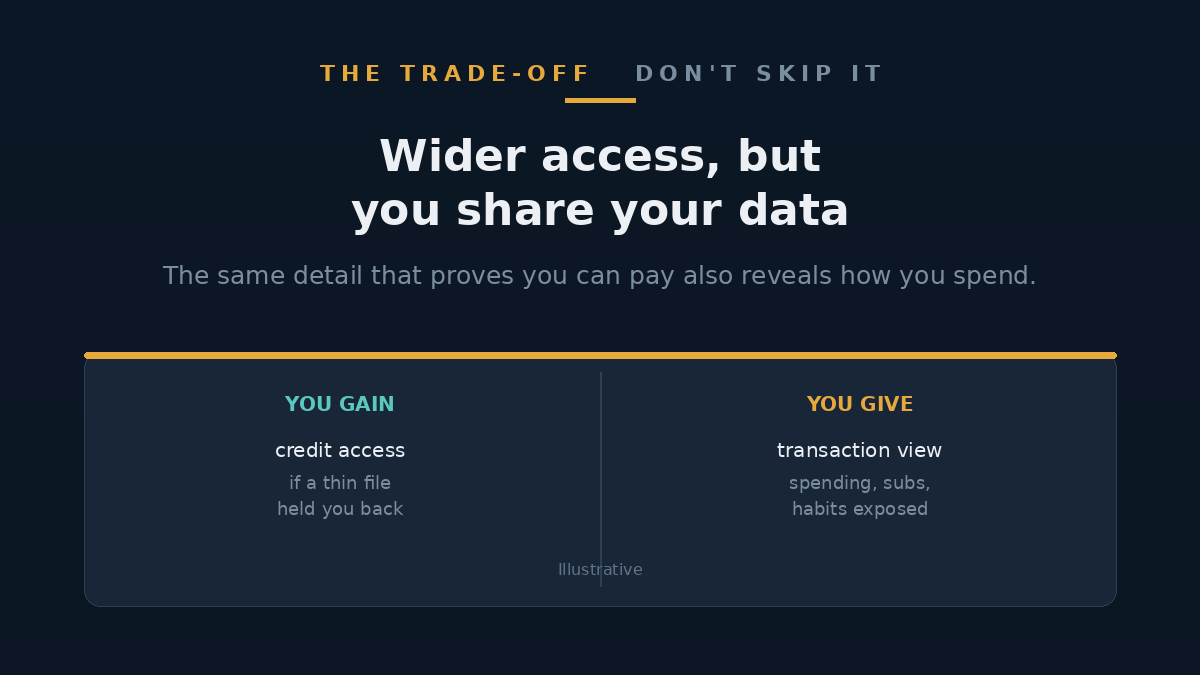
Here is the part the launch coverage tends to underplay. An affordability model that reads your bank flows only works if you let it read your bank flows. Open banking is consent-based and regulated, so this is not covert scraping – you grant access, and you can withdraw it. But the direction of travel is that getting credit increasingly means opening your transaction history to a third party, and "richer data" is a double-edged phrase. The same detail that proves you can afford a loan also reveals your gambling, your subscriptions, your spending patterns.
The fairness case is appealing and probably has real substance for thin-file borrowers. It is also, for now, a claim made by the company and its investors rather than an independently measured outcome. Newer, more granular data can widen access – or it can encode new kinds of unfairness if a model reads the wrong signals into ordinary spending. The technology is a tool; whether it makes lending fairer depends on how lenders use it, and that is not visible yet.
FAQ
What is a credit reference agency?
A company that collects data on borrowers and supplies it to lenders to inform lending decisions. In the UK the big three are Experian, Equifax and TransUnion; Noggin HQ is a rare new entrant.
How is this different from a normal credit score?
A conventional score is built largely from your past borrowing. Noggin uses open-banking data – your real income and spending – to estimate what you can afford now, which can help people with limited credit histories.
Do I have to share my bank data?
The model depends on it. Open banking is consent-based and you can revoke access, but the approach only works if you grant a lender or agency a view of your transactions.
Is it regulated?
Yes. Noggin HQ is authorised by the FCA as a credit reference agency, which is what allows it to supply data to regulated lenders. You can verify this on the FCA register.
The takeaway
Two things are true. Rewiring credit scoring around what people can actually afford is a fairer starting point than judging them on a patchy history, and a rare new FCA-authorised agency built in the North East is a real UK story worth noting. And getting there means normalising the idea that access to credit comes with opening up your bank account to be read. Whether that lands as fairer or just more surveilled will depend on the lenders, not the pitch – and that verdict is still to come.