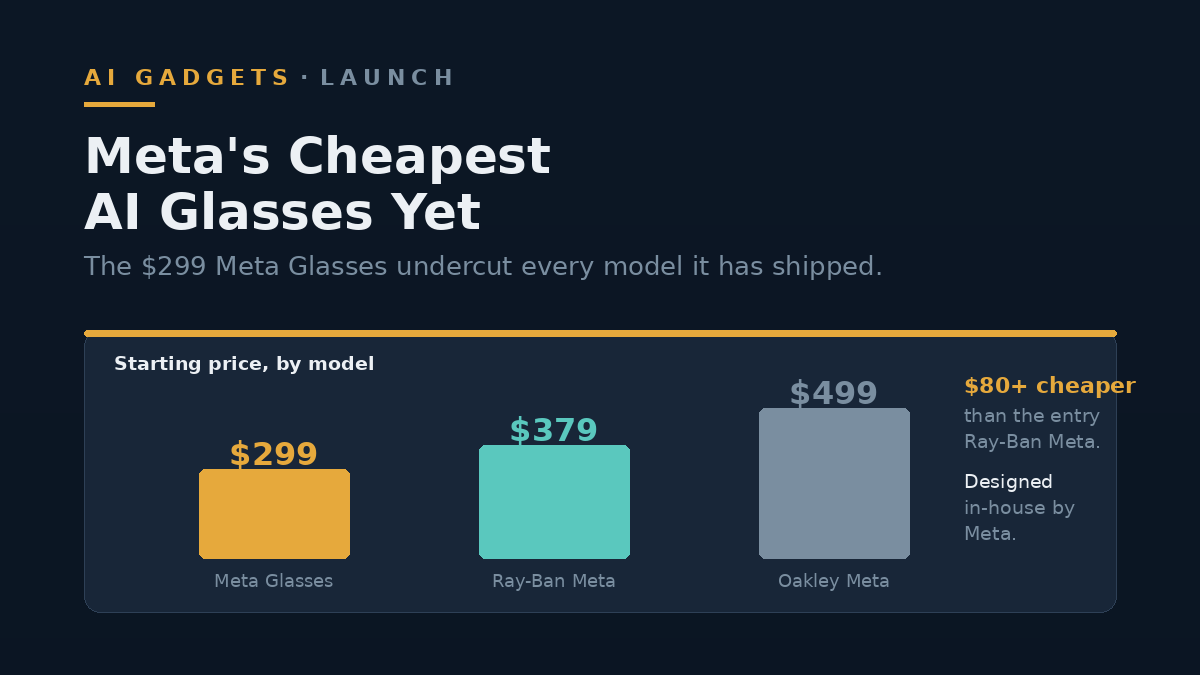
Meta has launched a new line of AI smart glasses called simply Meta Glasses, starting at $299 — its cheapest yet, and the first it has designed in-house rather than badging as Ray-Ban or Oakley. They keep the camera and open-ear speakers of earlier models but add a new on-board assistant; one version, made with Kylie Jenner, even lets you swap in her voice for the AI. The honest bottom line: this is less a leap in capability than a push to get AI glasses onto more faces at a lower price. They can take photos, answer questions about what you are looking at, and translate signs and menus — useful, occasionally clever, and built around an always-available camera that is worth thinking about before you buy.
This piece reflects reporting as of June 2026. Prices, model names and availability change quickly; check Meta's own listings before purchasing.
What was actually announced
Meta Glasses come in three styles — Meta Adventurer, Meta Fury, and a Kylie Jenner collaboration called Meta Glasses by Kylie, which costs around $399 and adds the option to use her voice as the assistant. They were designed in-house by Meta but launched, in the company's words, "in partnership" with the eyewear group EssilorLuxottica, which owns Ray-Ban and Oakley. The glasses have a camera and small speakers but no screen in the lens — so no visible display, unlike Meta's pricier Ray-Ban Display model. They ship with a new assistant called Muse Spark, which Meta describes as the first model out of its Meta Superintelligence Labs.
The headline change is price. At $299, Meta Glasses undercut the second-generation Ray-Ban Meta glasses (around $379) and the Oakley Meta range (from about $499). Meta's technology chief, Andrew Bosworth, framed the move plainly at the launch event, saying the company wants "to be able to be in many places in the market". Lowering the entry price is the obvious way to do that.
What the "AI" part actually does
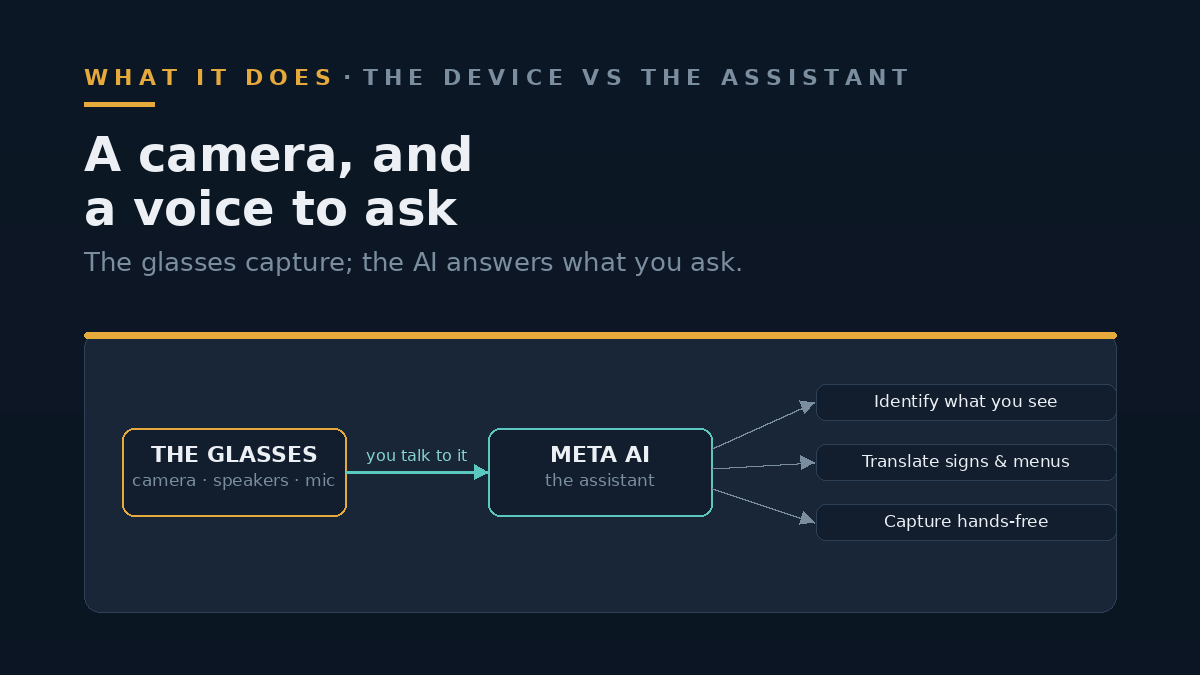
It helps to separate the glasses from the assistant. The glasses are a camera, a pair of open-ear speakers and a microphone in a normal-looking frame. The AI is what you talk to. You can ask it to identify what you are looking at, describe a scene, translate text in front of you, or capture a photo or short video hands-free. This is the same broad pattern as the existing Ray-Ban Meta glasses; the new assistant is meant to make those answers faster and more capable, though independent testing of how well Muse Spark performs in daily use was not available at launch.
For a non-technical buyer, the realistic expectation is a competent hands-free camera with a voice assistant attached — handy for travel, cooking, cycling or quick capture, less so as a replacement for your phone. The novelty features, such as a celebrity voice, are exactly that: novelty. They do not change what the device can do.
How it fits the wider market
Meta has a commanding early lead in this category — the research firm Counterpoint estimates it holds roughly 80% of the AI-glasses market. That lead is about to be tested. Google is preparing its own AI glasses with eyewear partners, Samsung is reported to be working on a pair, and Apple is widely expected to enter the category. A cheaper Meta model looks like a move to widen the base of users before that competition lands.
It also sits inside a much larger and more expensive bet. Meta is on track to spend a reported figure in the region of $145 billion on capital expenditure in 2026, much of it on AI, and its share price is down year-to-date as investors question the cost. Cheaper glasses that more people actually wear are one of the more tangible ways the company can show that spending leads somewhere.
The privacy question worth asking first
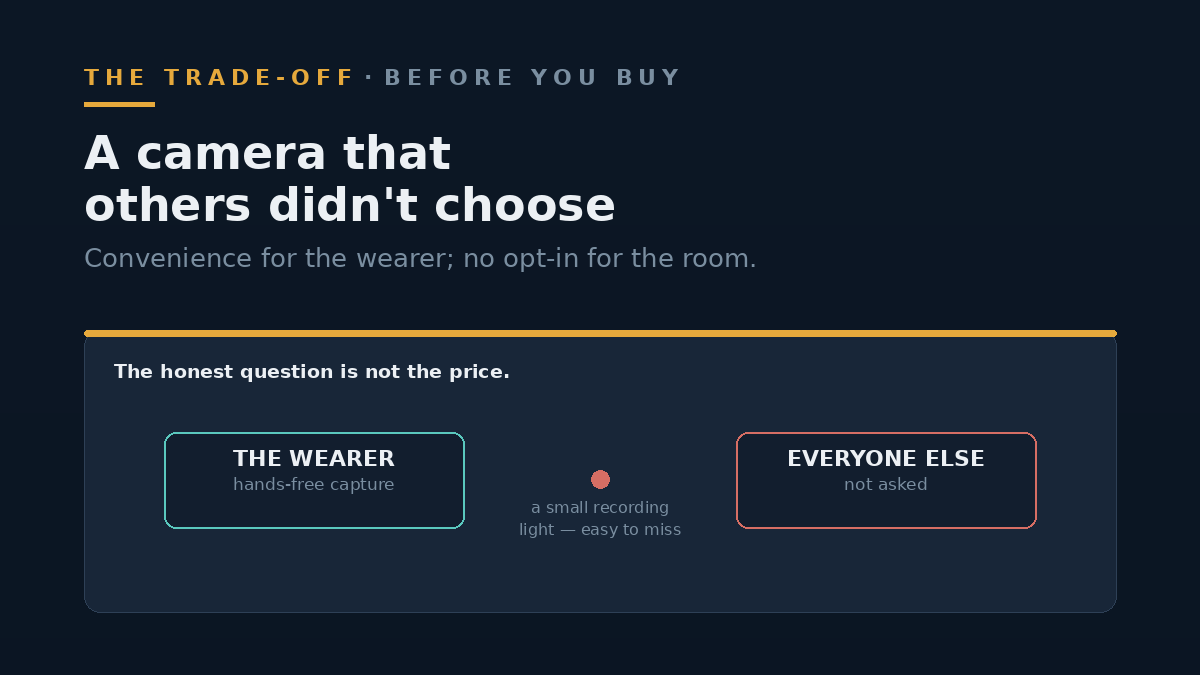
The part that deserves the most thought is the camera. A pair of glasses that can photograph or record what you see — without a phone held up as a visible signal — changes the etiquette of the room you are in. Meta's existing glasses use a small indicator light to show when recording, but the concern, raised repeatedly since the first Ray-Ban Meta launch, is that bystanders may not notice it. Meta says the new glasses include built-in safeguards meant to respect the privacy of people nearby, though it has not detailed how far those go beyond the existing recording light.
This is not a reason to avoid the product, but it is the honest trade-off. You are buying a convenient hands-free camera; the people around you have not opted into being in shot. If you are weighing these up, that consideration matters as much as the price or the assistant — and it is the one the marketing is least likely to lead with.
FAQ
How much do Meta Glasses cost?
They start at around $299, with the Kylie Jenner edition at about $399. That makes them cheaper than the Ray-Ban Meta (around $379) and Oakley Meta (from about $499) ranges. UK pricing and availability should be checked on Meta's own listings.
Do they have a screen you can see through?
No. These glasses have a camera and speakers but no in-lens display. Meta sells a separate, more expensive model with a small display; this is not that.
What can the AI assistant do?
You can ask it about what you are looking at, get translations of text in view, and take photos or video by voice. Meta says it runs a new assistant called Muse Spark, but independent testing of its quality was not available at launch.
Are they private to wear around other people?
That is the main caveat. They include a recording indicator light, but bystanders may not notice it. If you are sensitive to filming others without an obvious signal, factor that in before buying.
The takeaway
Meta Glasses are a sensible, unflashy product: the same idea as the Ray-Ban Meta line, made cheaper and put under Meta's own name to reach more people before rivals arrive. If you already wanted camera-and-assistant glasses, a lower entry price is good news. If you did not, a celebrity voice option will not change your mind — and shouldn't. The feature that should weigh on the decision is the one Meta talks about least: a capable camera living on your face, in rooms full of people who never agreed to it. Judge the glasses on that, not on the price tag alone.
Sources
- EssilorLuxottica — official press release on the new Meta Glasses collection (23 June 2026)
- Yahoo Finance — "Meta debuts AI-powered Meta Glasses, starting at $299" (23 June 2026)
- CNBC — "Meta announces new smart glasses starting at $299" (23 June 2026)
- CNN Business — "Meta is now designing its own, cheaper AI smart glasses" (23 June 2026)
- Counterpoint Research — AI-glasses market share analysis